Saturday, December 6, 2025

The Soft Magic of Christmas: Little Moments That Matter the Most

 Christmas is not just a date on the calendar. It’s a soft feeling… a slow warmth that settles in the heart long before the lights go up and the cake goes in the oven.

Every December, something magical happens—even if life has been busy, chaotic, or a little messy. The air smells different, homes feel kinder, and people unknowingly soften around the edges.

But what truly makes Christmas special are the little moments we rarely talk about…

That one extra star you place on the tree…

Not because the tree needs it,
but because the child in you still believes in wishes.

Like that moment you switch on the first fairy light…

and suddenly your whole room feels alive.

Or when a candle’s tiny flame makes you feel calmer…

as if it’s telling you, “Everything will be okay.”

Or the first bite of homemade plum cake…

that somehow tastes like childhood, comfort, and happiness all in one.

Or the winter breeze that makes you wrap your shawl a little tighter…

and reminds you that warmth isn’t just temperature — it’s a feeling.

 Why Christmas Feels Special

Because it slows us down.
It makes us softer.
It reminds us that even after a long, difficult year,
there’s always room for hope, kindness, and a little magic.

Christmas teaches us…

 to appreciate the people who stayed
 to let go of things that hurt
 to start fresh
 and to celebrate life, even if everything isn’t perfect

 This Christmas, give yourself a small gift

A quiet moment.
A deep breath.
A smile you didn’t force.
A little self-love — because you deserve that gentle care too.

 From SweetParamita to You

May this season bring you warmth in your heart, peace in your days, and a little sparkle that stays with you long after Christmas is gone.

Monday, November 3, 2025

Dev Deepavali 2025 – The Festival of Lights of the Gods

 Dev Deepavali, also known as Dev Diwali, is one of the most divine and breathtaking festivals celebrated in India — especially in Varanasi, the city of lights and spirituality.

This year, Dev Deepavali 2025 will be celebrated on Wednesday, 5 November 2025, marking the full moon day (Kartik Purnima), just fifteen days after Diwali.

 The Meaning and Myth Behind Dev Deepavali

The word Dev Deepavali means “the Diwali of the Gods.”
It is believed that on this sacred night, the Gods descend to the River Ganga to bathe in its holy waters.
The festival also commemorates Lord Shiva’s victory over the demon Tripurasura, symbolizing the triumph of good over evil and the restoration of divine peace.
That’s why this day is also known as Tripura Purnima.

Dev Deepavali 2025 Date and Timings

  • Festival Date: Wednesday, 5 November 2025

  • Tithi: Kartik Purnima

  • Purnima Tithi Begins: 4 November 2025 – 10:36 PM

  • Purnima Tithi Ends: 5 November 2025 – 6:48 PM

Note: Some calendars show Dev Deepavali beginning on the evening of 4 November, but it is observed on 5 November 2025, according to the sunrise (Udaya) tithi rule.

 How Dev Deepavali is Celebrated

The celebration of Dev Deepavali in Varanasi is a vision of pure divinity.
Every ghat along the River Ganga glows with millions of earthen lamps (diyas), transforming the entire riverfront into a glittering galaxy on Earth.

Devotees gather on the ghats to:

  • Perform Deep Daan (offering lamps to the Ganga).

  • Participate in the grand Ganga Aarti, where chants, bells, and flames fill the night with devotion.

  • Take a holy dip in the river, believed to cleanse sins and grant divine blessings.

  • Enjoy cultural programs, devotional music, and dance performances that continue late into the night.

Even if you’re not in Varanasi, people across India light diyas at home, worship Lord Shiva, Lord Vishnu, and Goddess Ganga, and fill their homes with peace and positivity.

 Spiritual Significance

It is believed that during Dev Deepavali, all celestial beings descend to Earth.
Lighting diyas symbolizes welcoming divine energies and spreading light within our hearts and surroundings.
It’s a reminder that light always triumphs over darkness, both outside and within us.

Dev Deepavali Message for You

“May the holy light of Dev Deepavali fill your heart with peace, your home with love, and your soul with divine grace.
Let every diya you light bring happiness, wisdom, and eternal blessings into your life.” 

 Celebrate the Divine Glow

Whether you’re standing by the illuminated ghats of Varanasi or lighting diyas at home, Dev Deepavali reminds us that the divine is always near.
Let this festival inspire you to embrace gratitude, compassion, and light.

 Happy Dev Deepavali 2025! 
May the divine lamps of Kartik Purnima guide you toward peace, prosperity, and purity.


Dev Diwali Greetings
dev deepavali message with clay lamp image

Images and sayings

Monday, October 27, 2025

🌾 Homemade Thekua Recipe – Traditional Sweet from Bihar (Healthy Twist)

 There’s something magical about traditional Indian sweets — the aroma of ghee, the crunch of fried goodness, and the comforting sweetness that connects us to our roots.

Today, I made one of my all-time favorites — Thekua, a beloved festive sweet from Bihar, especially made during Chhath Puja.
But this one comes with my little healthy and flavorful twist! ❤️

My Special Version

I made this thekua with:

  • Whole wheat flour (atta) – for a hearty, fiber-rich base

  • Sooji (semolina) – to add crunch

  • Ghee – for that divine aroma and softness

  • Jaggery – a healthier alternative to refined sugar

  • Little sugar – for mild caramelization during frying

  • Grated coconut, cardamom powder & sauf (fennel seeds) – for irresistible flavor

  • Cashew and raisins – for richness

  • A touch of milk – just enough for perfect binding

When fried, the thekuas turned golden brown, crisp outside, and soft inside — exactly how I love them! 

Step-by-Step Preparation

1. Prepare the dough:
In a large bowl, mix atta, sooji, jaggery, little sugar, grated coconut, cardamom powder, and sauf.
Add chopped cashew and raisins. Pour in melted ghee and rub it well into the mixture.
Add milk little by little and knead a semi-hard dough.

2. Shape the thekuas:
Take small portions of dough and press them into round shapes.
You can design them with a fork or mold to make them look traditional.

*I made the design with my knife.

3. Fry to perfection:
Heat ghee (or oil) in a pan. Fry the thekuas on low flame with so much patience until they turn deep golden brown. 
The little sugar caramelizes beautifully, giving the thekua a rich color and subtle crunch.

4. Cool and serve:
Let them cool completely before storing. They stay good for 7–10 days in an airtight jar — perfect for tea-time or festive treats!


Why This Version is Special

  • No maida – only wholesome atta

  • Less sugar, more jaggery

  • Rich in flavors from coconut, cardamom, and fennel

  • Festive & travel-friendly sweet

  • Perfect for Chhath Puja or anytime cravings!

Serving Ideas

Enjoy these thekuas with:

  • A cup of hot chai ☕

  • Warm milk with a dash of cardamom

  • Or just as an evening snack with family

My Sweet Note

I love how each bite of Thekua feels like a celebration — crisp, aromatic, and full of nostalgia.
Do try this recipe at home and let me know how it turns out in the comments below! 


#thekua recipe #homemade thekua #healthy thekua #bihari sweet recipe #atta thekua #jaggery thekua #chhath puja recipe #indian traditional sweet

Sunday, October 19, 2025

Bhaidooj 2025: Date, Celebration, Rituals & All You Need to Know


Bhai Dooj greetings cards, quotes and image wishes
GoodLightscraps.com

Bhaiphota, also known as Bhai Dooj or Bhai Phonta, is one of the most heartfelt Bengali festivals that celebrates the bond between brothers and sisters. It comes right after Kali Puja and Diwali, marking the end of the festive season with love, laughter, and family togetherness.

Why celebrate Bhai Dooj:

After Killing Narakasura, Lord Krishna visited his sister Subhadra who gave him a warm welcome with sweets and flowers, also applied tika on Krishna's forehead for his long life according to Hindu religion. So some believe this is the origin of this Festival.

In 2025, Bhaiphota will be celebrated with great enthusiasm across Bengal and other parts of India.

When is Bhaiphota 2025?

In 2025, Bhaiphota (or Bhai Phonta) will be celebrated on Thursday, October 23, 2025.

According to the Bengali calendar, it falls on the Dwitiya Tithi of Shukla Paksha in Kartik month, just two days after Kali Puja or Diwali.

Tithi timings:

  • Dwitiya Tithi Begins: 🕗 8:16 PM on October 22, 2025
  • Dwitiya Tithi Ends: 🕙 10:46 PM on October 23, 2025

So, the main Bhaiphota rituals will be performed on October 23, 2025, during the daytime.

Significance of Bhaiphota

Bhaiphota symbolizes the bond of love and protection between brothers and sisters. On this day, sisters pray for their brothers’ long life, good health, and happiness, while brothers promise to protect their sisters forever.

It’s believed that the “phota” (tilak or tika) applied by a sister protects her brother from all evils and misfortune.

This festival is very similar to Bhai Dooj celebrated in other parts of India, but the Bengali version — Bhaiphota — has its own charm and rituals.

How Bhaiphota is Celebrated in Bengal

Bengali households start preparing for Bhaiphota early in the morning. The day is filled with excitement, rituals, and delicious food.

Here’s how the celebration usually goes:

  1. Early Morning Bath:
    Brothers and sisters take a purifying bath early in the morning and wear new or clean clothes.

  2. Rituals Begin:
    Sisters perform the phota ceremony by applying a sandalwood paste (chandan) or ghee-mixed phota on their brother’s forehead. Sometimes, the phota is made using kaajal (soot) from a diya.

  3. Mantra and Blessings:

    While applying the phota (tilak) on her brother’s forehead, the sister chants this age-old Bengali mantra:

    “ভায়ের কপালে দিলাম ফোঁটা, যমের দুয়ারে পড়লো কাঁটা,
    যমুনা দেয় যমকে ফোঁটা, আমি দি আমার ভাইকে ফোঁটা।”

    Transliteration:
    “Bhayer kopale dilam phonta, jomer duare porlo kanta,
    yamuna dey jom ke phonta, ami di amar bhai ke phonta.”

    Meaning:
    “This is not just a mark on your brother’s forehead — it’s a sacred blessing that protects him from death and misfortune, just as Goddess Yamuna blessed her brother Yama with long life.”

  4. Exchange of Gifts and Treats:
    After the rituals, siblings exchange gifts, sweets, and sometimes handmade items.
    Sweets like rosogolla, sandesh, narkel naru, and payesh are common on this day.

  5. Family Feast:
    The day ends with a hearty family lunch or dinner — often featuring traditional Bengali dishes like luchi, alur dom, pulao, chholar dal, and mishti.

Where is Bhaiphota Celebrated?

Bhaiphota is celebrated mainly in West Bengal, Assam, Tripura, and by the Bengali community around the world.

In other states, the same festival is known as:

  • Bhai Dooj (North India)

  • Bhai Beej (Maharashtra, Gujarat)

  • Bhau Bij (Goa, Karnataka)

Though names differ, the emotion behind the festival remains the same — the love between siblings.

Can You Give Phota During Periods?

This is one of the most commonly asked questions every year.

Traditionally, women were advised not to perform religious rituals during menstruation, including giving phota. However, these beliefs come from old cultural customs, not spiritual laws.

In today’s time, it depends on personal belief and comfort.
If you’re comfortable and wish to give phota to your brother, there’s absolutely no harm — love, care, and emotion matter more than rituals.

Many families today ignore these taboos and celebrate Bhaiphota together with equality and warmth.

Bhaiphota Gift Ideas

If you’re wondering what to give your brother or sister on Bhaiphota 2025, here are a few ideas:

Bhaiphota 2025 Wishes & Quotes

Here are some sweet wishes you can share:

  • “Happy Bhaiphota 2025! May our bond grow stronger with each passing year.”

  • “Wishing my dear brother a life full of happiness, good health, and endless success.”

  • “To my sister, thank you for your unconditional love. You’re my best friend forever.”

  • “The phota on your forehead is not just a mark — it’s my blessing and my prayer for your well-being.”

Bhaiphota 2025 is more than a festival — it’s a celebration of emotions, togetherness, and love that ties siblings for life.
Whether you follow every ritual or keep it simple, the spirit of the day remains the same — a sister’s prayer for her brother’s happiness and a brother’s promise to protect his sister forever.

So this October 23, 2025, celebrate Bhaiphota with love, laughter, sweets, and lots of memories.


[Disclosure: Some of the links in this post are affiliate links. This means that if you click and make a purchase, I may receive a commission. This helps me keep the blog running and continue sharing free content with you. Thank you for your support!]

Wednesday, October 8, 2025

Diwali Decoration Ideas for Home 2025 — Budget & Eco-Friendly Tips


 Looking for budget-friendly and eco-conscious Diwali decoration ideas for 2025? Explore easy DIY décor tips, natural lighting, and creative ways to make your home shine this festive season.

Diwali, the Festival of Lights, is a time to fill our homes with warmth, colors, and happiness. But this year, let’s make it extra special — by celebrating it beautifully yet sustainably. From handmade diyas to natural rangoli colors, decorating your home for Diwali 2025 can be both eco-friendly and budget-smart.

Here are some simple yet creative ideas to light up your space — without harming your pocket or the planet. 

1. Go Traditional with Clay Diyas

Skip plastic lights and switch to earthen diyas — they not only create a warm, golden glow but also support local potters. 

 You can check some beautiful handmade diya sets on Amazon like earthen diyas,   12Clay Traditional Diyas, Handmade Terracotta Clay Diya

Choose diyas made from pure clay instead of synthetic material — they decompose easily and promote eco-friendly celebrations.

  • Soak diyas in water for a few hours before lighting to prevent cracking.

  • Paint them using natural colors or turmeric-based paint for a vibrant touch.

2. DIY Décor from Waste Materials

Transform everyday items into festive magic!

  • Use old glass bottles as lanterns — fill them with fairy lights.

  • Turn mason jars or used candle containers into tealight holders.

  • Cut colorful paper scraps into stars, torans, or hanging garlands.

3. Add a Touch of Nature

Bring the freshness of nature into your home.

  • Use banana leaves, marigold flowers, and mango leaves for décor.

  • Create flower rangoli using petals instead of chemical colors.

  • Add potted plants like tulsi or money plant near your entrance — they purify the air and look divine.

 4. Fairy Lights with a Twist

Fairy lights are a Diwali staple — but here’s how to make them unique:

  • Wrap them around bamboo sticks, plants, or curtains for a dreamy glow.

  • Opt for solar or LED lights to save electricity.

  • Reuse last year’s lights instead of buying new ones — small choices matter.

Here are some great picks for 2025: 
Flower LED Curtain String Lights: perfect for balconies or gardens 
Solar-Powered String Lights: classic and elegant for your house, no electricity needed. Flameless Floating LED CandlesThese battery-operated waterproof tealight candles are safe for homes with kids and pets, making them ideal for both indoor and outdoor use.

Check out more Diwali lighting ideas and fairy light designs on Amazon here

5. Handmade Torans & Wall Hangings

Torans (door hangings) symbolize prosperity. Instead of buying synthetic ones:

  • Use jute ropes, dry flowers, or fabric scraps to make handmade torans.

  • Add bells, beads, or shells for a festive sound and look.

 6. Fragrance & Positivity

Aromas instantly elevate festive vibes.

  • Use natural incense, dhoop, or essential oil diffusers.

  • You can even make your own citrus potpourri by drying orange peels and cloves.

7. Reuse and Recreate

Before you buy new décor — look around. Old fabrics can be turned into table runners, curtains, or cushion covers.
A fresh arrangement or color theme can make your home feel brand new — without spending a rupee.

    Diwali is not about how much you spend, but how much love you spread — through lights, laughter, and positive energy.
This 2025, let your home shine with creativity, consciousness, and care for the Earth. 💛

Wish you and your family a bright, peaceful, and eco-friendly Diwali 2025!


[This post contains affiliate links. If you purchase through these links, I may earn a small commission — at no extra cost to you. Thank you for supporting the blog!]


Saturday, October 4, 2025

Diwali Wishes for Friends

 Here are some beautiful Diwali wishes and some funny & lighthearted Diwali wishes for friends you can use for WhatsApp status, Instagram captions for friends — warm, fun, and heartfelt — perfect for messages, posts, or cards.

Heartfelt Diwali Wishes for Friends

  1. Wishing you endless joy, laughter, and light this Diwali. May our friendship keep shining brighter every year! 

  2. May the glow of diyas brighten your path and fill your home with happiness. Happy Diwali, my dear friend! 

  3. Friends like you make life sparkle even more than the fireworks. Have a magical Diwali! 

  4. Let’s celebrate the festival of lights with laughter, sweets, and endless memories. Happy Diwali, buddy! 

  5. Wishing you success as bright as the Diwali lights and happiness as sweet as laddoos! 

Short & Catchy Diwali Wishes for Social Media

  1. May your Diwali shine brighter than your selfie flash! 

  2. Good vibes, good food, great friends — that’s what Diwali’s all about! 

  3. Light up your life with love, laughter, and friends who feel like family. Happy Diwali! 

  4. Diwali feels more special with friends like you to share the sparkle. 

  5. Let’s glow together this Diwali — inside and out! 

Funny Diwali Wishes for Friends

  1. Wishing you a Diwali full of sweets, lights, and no dieting regrets! 

  2. May your Wi-Fi be strong, your phone battery full, and your relatives’ visit short this Diwali! 😜

  3. Let’s make this Diwali as bright as our Instagram filters — and twice as fake! 😆

  4. Don’t burst crackers, burst into laughter (and maybe a few laddoos)! 😋

  5. Wishing you a Diwali so bright that even your electricity bill gets scared! 💡

  6. Hope your Diwali is less about cleaning and more about eating! 😂

  7. May your life be as colorful as rangoli… and as messy too! 😉

  8. This Diwali, forget glow-up — let’s just light up (the diyas, of course)! 🔥😅

  9. Wishing you loads of sweets, sparkles, and zero weight gain! 🤭

  10. Have a dhamakedar Diwali — but please, no real dhamaka in the kitchen! 💣

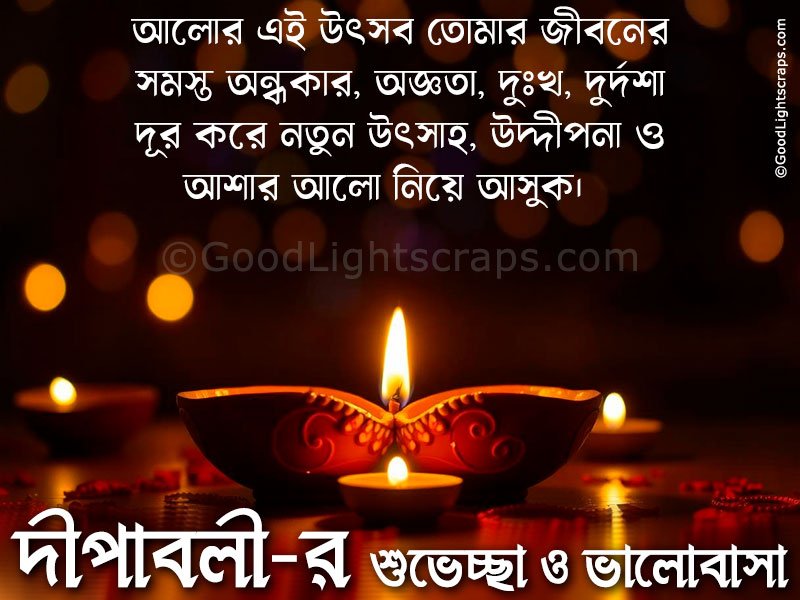
10 spiritual Diwali (দীপাবলি/কালীপূজা) wishes in Bengali

 Here are 10 spiritual Diwali (দীপাবলি/কালীপূজা) wishes in Bengali, beautifully written and perfect for sharing on social media as Facebook/instagram caption, WhatsApp status..

১. শুভ দীপাবলির আলোর প্রদীপে তোমার জীবনের সব অন্ধকার দূর হোক। ঈশ্বরের আশীর্বাদে তোমার দিনগুলো হোক সুখ, শান্তি ও সমৃদ্ধিতে ভরা। 

২. মা লক্ষ্মীর কৃপা ও কালীমায়ের শক্তি তোমার জীবনে আলো ছড়াক। শুভ দীপাবলি! 

৩. অন্ধকার থেকে আলোয়, অজ্ঞান থেকে জ্ঞানে—এই দীপাবলি তোমার জীবনে আনুক নতুন জাগরণ। 

৪. প্রতিটি প্রদীপ হোক আশার প্রতীক, প্রতিটি প্রার্থনা হোক শান্তির বার্তা। শুভ দীপাবলি! 

৫. মা কালী তোমার জীবনের সব দুঃখ-দুর্দশা দূর করুন, আর লক্ষ্মী দেবী দিন তোমাকে আনন্দ ও ঐশ্বর্যের বরকৃপা। 

৬. দীপাবলির এই পবিত্র রাতে তোমার হৃদয় ভরে উঠুক আলো ও করুণায়। শুভ দীপাবলি! 

৭. তোমার ঘরে আলো জ্বলুক শুধু প্রদীপে নয়, অন্তরে—সততা, ভালোবাসা ও শান্তির আলোয়। 

৮. কালীমায়ের আশীর্বাদে তোমার জীবনের প্রতিটি মুহূর্ত হোক শক্তি, সাহস ও সাফল্যে ভরা। 

৯. শুভ দীপাবলিতে প্রার্থনা করি—তোমার মন হোক নির্মল, জীবন হোক আলোকিত, আর আত্মা হোক শান্তিতে পরিপূর্ণ। 

১০. আলো জ্বেলে মুছে দাও সমস্ত অন্ধকার, অন্তরে আনো ভক্তির দীপ। শুভ দীপাবলি ও কালীপূজা! 

Sunday, September 28, 2025

Durga Puja captions for Instagram & Facebook

 Here’s a list of Durga Puja captions you can use for Instagram & Facebook — a mix of festive, emotional, and aesthetic lines that fit both personal photos and puja vibes.

Traditional & Festive Vibes

  • "Durga Maa has arrived with blessings, joy, and new beginnings.  #DurgaPuja"

  • "Adda, Anjali, and Asche Bochor Abar Hobe!  #PujaVibes"

  • "Shubho Sharodiya! Let the beats of the dhaak fill our hearts with happiness."

  • "Maa Durga is here to bless us with power, peace, and prosperity.  #SharodUtsav"

  • "Pandal hopping, sindoor khela, and unlimited memories.  #DurgaPuja2025"

Fun & Youthful Captions

  • "Pandal hopping level: Professional 😎 #DurgaPujaMood"

  • "Outfit ready, dhaak beats steady, let’s make this Puja legendary."

  • "5 days of happiness > 365 days of waiting  #PujaVibes"

  • "Durga Puja isn’t a festival, it’s an emotion. "

  • "From morning anjali to midnight adda – Puja is our cardio. 🔥"

Aesthetic & Emotional

  • "Lights, dhaak, and a thousand smiles — Puja brings the soul alive."

  • "The fragrance of shiuli flowers and the rhythm of dhaak drums… Puja is here! "

  • "These 5 days feel like a lifetime of joy.  #ShubhoPuja"

  • "Wrapped in tradition, dipped in devotion."

  • "Durga Puja is not just celebrated, it’s lived.  #PujaDiaries"


When is Durga Ashtami 2025? Date, Time, Puja Muhurat & Rituals


Durga Ashtami, also known as Maha Ashtami, is one of the most significant days of Shardiya Navratri. Devotees worship Goddess Durga with great devotion, perform Sandhi Puja, and observe Kanya Pujan. Many people often search for the exact Durga Ashtami 2025 date and time, so here are all the details you need.

    Durga Ashtami 2025 Date and Tithi Timing:

Ashtami Tithi Begins: 29th September 2025 at 04:32 PM

Ashtami Tithi Ends: 30th September 2025 at 01:48 PM

 Since most of the Ashtami Tithi falls on 29th September 2025, Durga Ashtami Puja and Vrat will be observed on this day.

    Durga Ashtami 2025 Puja Muhurat:

Main Puja Date: 29th September 2025 (Monday)

Sandhi Puja Muhurat: Between Ashtami and Navami (timings will be updated closer to the date)

Kanya Pujan (Kumari Puja): Performed in the morning on Ashtami or Navami

    Sandhi Puja Muhurat for 2025:

Based on Panchang / DrikPanchang data:

The Ashtami Tithi in 2025 begins: 29 September 2025 at ~ 04:31 or 04:32 PM (depending on city) Drik Panchang

The Ashtami Tithi ends: 30 September 2025 at ~ 06:06 PM Panchang 

Accordingly, the Sandhi Puja Muhurat is given as:

5:42 PM to 6:30 PM (on 30 September 2025) Drik Panchang

Another source (ProKerala) also mentions Sandhi Puja Muhurta: 05:42 PM – 06:30 PM (for a given location) 

So for most places, 5:42 PM to 6:30 PM (on 30 September 2025) is the accepted Sandhi Puja time window.

Kanya Pujan (Kumari Puja): Performed in the morning on Ashtami or Navami

Importance of Durga Ashtami

On this day, devotees worship Goddess Mahagauri and also perform rituals for Goddess Chamunda.

Kanya Pujan (worship of young girls) symbolizes honoring the divine feminine energy.

    It marks the victory of Goddess Durga over the demon Mahishasura, celebrating the triumph of good over evil.

        Rituals of Durga Ashtami 2025:

Early morning Durga Puja with flowers, sweets, and incense.

Recitation of Durga Saptashati, Chalisa, and Navratri Aarti.

Performing Sandhi Puja at the junction of Ashtami and Navami.

Kanya Puja where nine girls are offered food, gifts, and blessings.

    Durga Ashtami Fasting Rules:

Devotees keep a sattvik fast, eating only fruits, milk, and light meals.

Some observe nirjala vrat (without water) as a form of deep devotion.

The fast is broken after Kanya Pujan or evening prayers.

    Why is Durga Ashtami Special?

Removes obstacles from life.

Brings health, wealth, and prosperity.

Protects from negative energies.

Grants divine blessings and inner strength.

Thursday, September 25, 2025

Top 5 Navratri Vrat Recipes and Their Hidden Meanings

 Navratri is more than nine nights of devotion, dance, and joy—it’s also a celebration of purity, balance, and mindful living. While many people see it as a time of fasting, in reality, Navratri food is full of nourishment, symbolism, and ancient wisdom. Every dish prepared during these sacred days carries a deeper meaning, reminding us that food is not just about taste, but also about tradition and spirituality.

Here are the top 5 Navratri foods you should definitely try this festive season—along with the hidden meanings that make them even more special.

🍲 1. Sabudana Khichdi – Patience on a Plate

Light, wholesome, and comforting, Sabudana Khichdi is a Navratri classic made with tapioca pearls, peanuts, and mild spices. Its soft, chewy texture makes it easy to digest while keeping you energized during fasting hours.

Hidden Meaning: The tiny pearls of sabudana symbolize patience and consistency. Just as they take time to soak and cook perfectly, they remind us that spiritual growth also requires steady faith and perseverance.

🍠 2. Sweet Potato (Shakarkandi) Chaat – The Sweetness of Simplicity

If you’re craving something tangy yet filling, Shakarkandi Chaat is your go-to Navratri snack. Boiled sweet potatoes tossed with rock salt, lemon juice, and a sprinkle of spices create a healthy, satisfying treat.

Hidden Meaning: Sweet potatoes grow underground, teaching us humility and grounding. Their natural sweetness reflects the beauty of simplicity—reminding us that joy doesn’t always come from luxury, but from simple, nourishing choices.

🥛 3. Makhana Kheer – Prosperity in Every Spoon

Makhana (fox nuts) are a superfood, and when turned into creamy Makhana Kheer, they become a divine Navratri dessert. Packed with protein, calcium, and antioxidants, it’s both indulgent and guilt-free.

Hidden Meaning: Makhana is considered sattvic, symbolizing purity and abundance. Its blossoming texture when roasted is often compared to spiritual awakening—prosperity not just in wealth, but in inner growth.

🌿 4. Kuttu (Buckwheat) Pooris – Strength with Discipline

No Navratri thali feels complete without crispy Kuttu Pooris made from buckwheat flour. Gluten-free and rich in fiber, they provide sustained energy while keeping digestion light.

Hidden Meaning: Buckwheat represents discipline and willpower. These pooris remind devotees that fasting isn’t just about avoiding certain foods, but about strengthening inner resolve and staying true to one’s vows.

🥥 5. Coconut Ladoo – Purity Wrapped in Sweetness

A festival without sweets is incomplete, and Coconut Ladoos bring the perfect balance of taste and symbolism. Made with grated coconut and jaggery (or condensed milk), they melt in the mouth yet leave behind deep satisfaction.

Hidden Meaning: The coconut has always been considered sacred in Indian rituals. Its hard shell represents the ego, and breaking it symbolizes surrender. The pure white within stands for devotion, love, and purity of heart.


    Navratri food is not “fasting food”—it is soul food. Every dish tells a story, carrying wisdom from generations. Eating these sattvic foods during the festival not only purifies the body but also calms the mind and uplifts the spirit.

So, this Navratri, as you enjoy these delicious recipes, remember that every bite is a prayer, every flavor a blessing, and every meal a step closer to spiritual balance.

Do We Celebrate Festivals for Ourselves or Instagram? 🤔 A Modern Dilemma

 Festivals are meant to bring people together—whether it’s the glow of Diwali diyas, the vibrant colors of Holi, or the soulful celebrations of Durga Puja. Traditionally, these moments were about family, food, rituals, and heartfelt joy.

But today, another layer has been added: the Instagram effect. From perfectly framed rangoli shots to stylish festive outfits, it often feels like festivals are incomplete without a post or reel. While sharing these vibrant glimpses online helps showcase our culture and connect with others, it also makes us wonder—are we celebrating festivals for ourselves, or just for social media?

The truth probably lies in balance. Instagram can amplify the beauty of celebrations, but the essence of any festival still lives in laughter shared with loved ones, delicious food enjoyed without rushing for photos, and traditions that go beyond trends. Likes and hashtags may fade, but real memories remain timeless.

    This festive season, capture your moments if you want—but don’t forget to live them too.


Saturday, September 20, 2025

Things People Avoid During Navratri and Their Spiritual Significance

 Navratri, the nine sacred nights dedicated to Goddess Durga, is not only a festival of devotion but also a time of purification and self-discipline. Devotees across India and beyond observe certain restrictions during these days to maintain purity in body, mind, and surroundings. These practices are deeply rooted in tradition, symbolism, and spiritual beliefs. Let’s look at some common things people avoid during Navratri and why.

1. Cutting Nails and Hair

As discussed earlier, trimming nails or hair is believed to remove parts of the body considered impure. Since Navratri is about invoking the Goddess and maintaining sanctity, people avoid such acts. It is also symbolic of self-discipline and focusing on spiritual rather than physical grooming.

2. Eating Non-Vegetarian Food

One of the strictest taboos is consuming meat, fish, or eggs during Navratri. These foods are associated with violence (tamasik energy), while Navratri emphasizes sattvik (pure, light, and balanced) living. Devotees prefer fruits, milk, and vegetarian meals prepared without onion and garlic.

3. Onion and Garlic

Even though they are vegetarian, onion and garlic fall under the category of tamasik foods in Ayurveda. They are said to increase aggression and dullness of mind, which goes against the calm, devotional spirit of Navratri.

4. Alcohol and Tobacco

Consumption of alcohol, tobacco, or any intoxicants is strictly avoided. These substances cloud the mind and disconnect a person from spiritual awareness. During Navratri, clarity of thought and devotion are most important.

5. Wearing Black or Dark Colors

Traditionally, dark colors like black are avoided during Navratri as they are linked with negativity or mourning. Instead, devotees wear bright, vibrant colors that correspond to the Goddess’s energies for each day. For example, red for power, yellow for happiness, green for growth, and so on.

6. Cutting Down Sleep Excessively

While some people stay awake at night for jagran or devotional singing, oversleeping or laziness is discouraged. Navratri is about alertness, prayer, and discipline. Many devotees wake up early, bathe, and begin their day with puja and chanting.

7. Gossip, Anger, and Negative Speech

Devotion is not only about rituals but also about thoughts and words. People consciously avoid gossiping, arguing, or speaking harshly during Navratri. The idea is to cultivate positivity and peace within and around.

8. Sexual Activity

Traditionally, restraint in sensual pleasures is practiced during Navratri. It’s seen as a time to conserve energy and redirect it towards spiritual growth and devotion.

9. Buying or Using Leather Items

Leather comes from animals, and using it during Navratri is avoided since the festival emphasizes non-violence and purity. Many people refrain from wearing leather belts, shoes, or accessories during these nine days.

10. Wastefulness and Excess

Navratri teaches balance and simplicity. Devotees avoid extravagance, unnecessary spending, or indulgence in luxury. Instead, they focus on charity, helping others, and living with gratitude.

    The practices followed during Navratri may differ across regions and families, but the essence remains the same—self-discipline, purity, and devotion to the Divine Mother. These restrictions are not about denial but about creating an atmosphere where the mind is calm, the body is light, and the spirit is ready to connect with the Goddess.

By observing these simple practices, devotees align themselves with the energy of Durga and invite her blessings for strength, prosperity, and protection.

Thursday, September 18, 2025

Top 5 Places to Celebrate Navratri in Kolkata (2025 Edition)


 Kolkata is world-famous for Durga Puja, but in the past decade, the city has also embraced Navratri and Dandiya nights with open arms. From traditional Gujarati samaj gatherings to glamorous stadium events, Kolkata offers something for everyone—be it devotion, dance, or delicious food.

If you’re in the city this Navratri, here are the Top 5 Places to Celebrate Navratri in Kolkata (with full details on tickets, food, and timings):

1. Garba Dandiya Utsav 2025 by The Urban City

📍 Venue: SG Banquet (Shree Guru), Dunlop (above Reliance Digital, near Dunlop Metro)
🕒 Dates & Time: From 21st September 2025, evenings (~5 hours duration per night)
🎟 Tickets: ₹549 onwards (Book online at District / Paytm Insider / BookMyShow)
🍴 Food: Food stalls available with snacks & festive meals (not included in ticket price).
     Open-air terrace + banquet setup, Bollywood + Gujarati beats, vibrant photo booths.

    Best for: Youngsters & families in North Kolkata looking for an energetic yet pocket-friendly Garba night.

2. Taaza Dandiya 2025 – Biggest Dandiya Night of Eastern India

📍 Venue: Netaji Indoor Stadium
🕒 Date & Time: Check BookMyShow – usually 6 PM onwards on one big festive night.
🎟 Tickets: ₹800 onwards
🍴 Food: Food counters & stalls available inside (vegetarian & festive fast food options).
     Celebrity performers, huge crowd, professional lights & sound, true stadium energy.

     Best for: Those who love grand-scale celebrations with thousands of people and non-stop dancing.

3. Dandiya Mahotsav Season 2 at Regenta Orkos, Kasba

📍 Venue: Melody Hall, Regenta Orkos Hotel, Kasba
🕒 Dates & Time: 29th Sept – 1st Oct 2025, from 7 PM onwards
🎟 Tickets: ₹799 onwards
🍴 Food: Banquet-style food stalls, drinks (extra charges apply).
     Indoor AC hall, family-friendly ambience, organized Garba circles with traditional & Bollywood DJs.

    Best for: Families and working professionals who prefer comfort, less chaos, and a premium setting.

4. Dholira – Jalsa 6 at Earth Banquet, Hotel O2, VIP Road, Kaikhali

📍 Venue: Earth Banquet, Hotel O2, VIP Road (Kaikhali)
🕒 Date & Time: 29th September 2025, from 8 PM onwards
🎟 Tickets: ~₹700 – ₹1200 (Book via BookMyShow / Paytm Insider)
🍴 Food: Premium buffet or stalls, depending on ticket type.
      Upscale crowd, glamorous decorations, live Garba singers & DJs.

    Best for: People looking for a luxury Navratri night with less crowd and a stylish vibe.

5. Heera Garden Dandiya Night 2025, Topsia

📍 Venue: Heera Garden, Topsia
🕒 Date & Time: 25th September 2025, from 7 PM onwards
🎟 Tickets: ₹899 onwards
🍴 Food: Festive food stalls (veg options, chaats, snacks).
    Open-air garden ambience, dancing under the stars, energetic crowd.

     Best for: Groups of friends & youngsters who enjoy open-air, casual festive vibes.

Traditional Gujarati Samaj Celebrations

If you want a more devotional and cultural experience:

  • Bhawanipur Gujarati Samaj (Elgin Road): Known for authentic Garba & Gujarati bhajans. Food stalls serve traditional vegetarian thalis & snacks. Entry is often cheaper than big events, sometimes donation-based.

  • Laxminarayan Temple (Bhawanipur): Organizes Garba with a spiritual touch, along with a community canteen offering delicious vegetarian food. Perfect for families & elders.

Final Tips for Navratri in Kolkata

  • Book tickets early (most events sell out quickly).

  •  Carry your own dandiya sticks unless the event provides them.

  • Dress in traditional attire (chaniya choli / kurta) – many events also host “best dressed” contests.

  • Food is usually not included in tickets – carry some cash/card for stalls.

  •  Arrive early to avoid queues and get good space in the Garba circle.

Kolkata truly offers a mix of devotion, dance, and dazzling celebrations for Navratri. Whether you want the traditional charm of Gujarati samaj or the glitz of stadium dandiya, the city has something for everyone.

So put on your best outfit, pick up your dandiya sticks, and get ready to dance the nights away this Navratri 2025 in Kolkata! 


What’s on Your Plate Isn’t Their Business—But Why Do People Judge Anyway?”

 Have you ever noticed how quickly people comment on what others eat?

Someone orders a salad—“Oh, are you on a diet?”
Someone eats fast food—“That’s so unhealthy.”
Someone skips meat—“Why are you so picky?”

It seems like no matter what’s on the plate, someone has an opinion. But why do we care so much about what other people eat?

Food is Personal, But Also Public

The truth is, food isn’t just about hunger—it’s tied to our identity, culture, beliefs, and even emotions. What you eat can show where you come from, what values you hold, or how you see yourself. Because of that, when someone eats differently, it can feel like a challenge to our own choices. And instead of accepting the difference, many people jump to judgment.

Meals Are About Belonging

Think about family dinners, office lunches, or festivals. Eating together feels like a bonding ritual. So when someone says “no” to a dish, others may take it personally, as if they’re rejecting the group rather than just the food. That small misunderstanding can easily turn into criticism or gossip.

Culture Shapes What’s “Normal”

Every culture has its own idea of what’s acceptable to eat and what’s not. Something seen as delicious in one country may be considered strange or even offensive in another. Because of this, people often judge food choices that don’t match their own cultural norms—even if those choices are perfectly normal somewhere else.

The Health and Image Factor

Food is also linked to health and body image, and that’s where stereotypes kick in. A smoothie can be labelled “fitness goals,” fries can be labelled “lazy food,” and expensive organic products might get tagged as “show-off.” We rarely stop to think that people choose foods for many reasons—taste, health needs, budget, or simply comfort.

Sometimes, It’s Our Own Insecurities Talking

Here’s the interesting part: a lot of judgment comes from projection. If someone feels guilty about eating junk food, they might tease a healthy eater. If someone’s on a strict diet, they might look down on people who aren’t. In reality, the judgment often says more about the person giving it than the one receiving it.

Food and Social Status

Let’s face it—food has also become a symbol of status. A fancy café coffee might seem “classy,” while street food might be unfairly dismissed as “cheap.” These labels aren’t really about taste; they’re about how society uses food to create divisions.

    At the end of the day, food is personal. It carries culture, memories, health choices, and comfort all at once. When we judge someone’s plate, we’re forgetting that everyone has their own story behind what they eat.

So maybe next time, instead of saying, “Why are you eating that?” try asking, “What do you like about it?” You might discover a new recipe, a cultural tradition, or simply a different way of looking at food. And that’s a much better way to connect.

Monday, September 15, 2025

Kumari Puja During Navratri – Significance and Rituals


 Kumari Puja, also known as Kanya Puja, is one of the most sacred rituals observed during Navratri, especially on the eighth (Ashtami) or ninth (Navami) day of the festival. In this ritual, young girls between the ages of two and ten are worshipped as the living embodiment of Goddess Durga. The practice reflects the belief that the supreme feminine power, or Shakti, resides in every girl child, making her a pure and divine representation of the Goddess herself.

The roots of Kumari Puja are found in ancient scriptures like the Devi Bhagavata Purana and Kumari Tantra. These texts describe that the Goddess manifests in young girls in her most innocent and untainted form. Each age is associated with a different aspect of the Goddess—for instance, a two-year-old is worshipped as Kumari, a three-year-old as Trimurti, a four-year-old as Kalyani, and so on, with a nine-year-old symbolizing Durga herself. This highlights the idea that divinity exists in every stage of a girl’s growth.

The ritual is performed with deep devotion. The girls, often invited from family or neighborhood, are welcomed with respect, their feet are washed, a tilak is applied to their foreheads, and they are offered traditional dishes like puri, chana, and halwa. After the meal, devotees usually present them with small gifts, new clothes, or dakshina as a token of gratitude. Beyond its spiritual essence, Kumari Puja also serves as a reminder to society to honor and respect women, emphasizing that true divinity lies in nurturing and valuing feminine energy.

Many devotees wonder why only girls are worshipped in this ritual. The answer lies in the symbolism of purity and innocence. A child represents a state untouched by worldly attachments, and a girl child, in particular, is seen as the closest manifestation of the Goddess in her most compassionate and powerful form. Another common question is about the number of girls who should be worshipped. While tradition suggests nine girls symbolizing the nine forms of Durga, families often perform the puja with as many girls as they can invite, keeping their devotion as the central focus.

The food offered during Kumari Puja also carries meaning. Puri represents completeness, chana signifies strength, and halwa is associated with sweetness and auspiciousness. Feeding these dishes to the young girls is considered equivalent to offering bhog directly to the Goddess.

    In essence, Kumari Puja is not only about seeking blessings for prosperity, strength, and protection but also about embracing the idea that divinity resides in every child. It reminds us that the feminine energy, pure and powerful, is the foundation of creation and deserves reverence in every form.

The Soft Magic of Christmas: Little Moments That Matter the Most

 Christmas is not just a date on the calendar. It’s a soft feeling… a slow warmth that settles in the heart long before the lights go up and...